Para leer en español, seleccione la bandera en la esquina superior de su pantalla.
Stay updated with the Lago Alianza newsletter!
Sign up to receive our newsletter via email.
Lago Alianza Newsletter – July 2026
From Idea to Community Resource: Lago Alianza’s First Year
 When Lago Alianza first began gathering focus groups in January 2025, the idea was clear: strengthen the nonprofit ecosystem across Lakeside by helping organizations connect, learn, collaborate, and become more sustainable.
At the time, however, Lago Alianza had no public brand, no marketing materials, limited recognition in the community, and no established systems. By the June 2025 Expo, we were still very much introducing ourselves.
Then came the nonprofit survey in August 2025: the first in-depth look at the needs, challenges, strengths, and realities facing nonprofit organizations throughout the Lakeside region. The survey gave Lago Alianza an important foundation for understanding what local organizations need most and where collaboration could make a meaningful difference.
Since then, in less than a year, the organization has laid a foundation needed to support nonprofits across the Lakeside region.
Much of this has been the necessary behind-the-scenes work of building an organization that can be trusted, sustained, and useful. At the same time, Lago Alianza is beginning to earn the confidence and participation of nonprofit leaders while delivering practical support in response to real needs.
Among the milestones so far:
Lago Alianza has obtained U.S. 501(c)(3) status. We secured Fiscal Sponsorship Allies as a fiscal sponsor to process tax-exempt contributions to the 501(c)(3), while founding supporters have made significant personal financial commitments to help launch and sustain the work. We are also thoughtfully considering the right point in our development to establish formal A.C. status in Mexico.
We have established an office, databases, and basic operating systems; developed rudimentary governing structures in both the United States and Mexico; and built communication tools that help keep people connected. These include a recognizable brand, website, newsletter, social media presence, WhatsApp group, and Groups.io forum for nonprofit leaders.
Our founders also created and funded the Chapala Nonprofits Donor-Advised Fund, or DAF. The DAF operates separately from Lago Alianza but is intended to fund projects that directly contribute to the capacity, sustainability, and long-term strength of local organizations. Through that effort, five local nonprofits have been vetted and a number of important grants have already been made.
Lago Alianza is also piloting initiatives with outside experts and potential long-term partners, learning which training opportunities and resources are the best fit for our diverse nonprofit community.
Most importantly, the work is beginning to reach nonprofit leaders directly.
We have offered successful one-on-one consultations, convened nonprofit leaders around the idea of a stronger shared ecosystem, and continue working through the important challenge of making meetings genuinely bilingual. At the most recent gathering, there was a noticeable increase in new participants, particularly leaders from Mexican-led organizations.
We have launched an AI training initiative with more than 40 participants committed to a 12-week course. The program is offered by PILU.mx in both Spanish and English. Three organizations have been selected to pilot a resilience self-assessment tool with Impact Accelerator. We are also reviewing a Legalization, Compliance, and Nonprofit Strengthening Guide written by Marco Pérez, designed to help organizations better understand practical steps toward becoming stronger and more sustainable.
Perhaps just as important, Lago Alianza is becoming known as a place where nonprofit leaders, volunteers, donors, and community members can turn to each other for support. And organizations are beginning to come to us with their own goals and challenges, whether that means helping donors better understand estate giving, building future nonprofit leaders, strengthening operations, or finding the right connections and resources. We don’t always have the answers but, as a fledging nonprofit ourselves, we are often learning together.
In a short amount of time, Lago Alianza has moved from an idea to an emerging community resource. We are beginning to connect more people, strengthen organizations, and help the Lakeside nonprofit sector see what may be possible when we work together.
We are also committed to helping the broader Lakeside community better understand the nonprofit sector itself: the daily work being done, the people being served, the volunteers and leaders making it possible, and the real resources required to sustain that work. A stronger sector depends not only on stronger organizations, but also on a community that sees, values, and supports them.
There is still much to do. Building a healthier nonprofit ecosystem is long-term work that depends on trust, collaboration, and sustained commitment. Yet in less than a year, Lago Alianza has moved from an idea to a growing community resource—one that is connecting people, strengthening organizations, and helping build the conditions for a stronger nonprofit sector across Lakeside.
Nonprofit Spotlight: Salto Mentoría A.C.
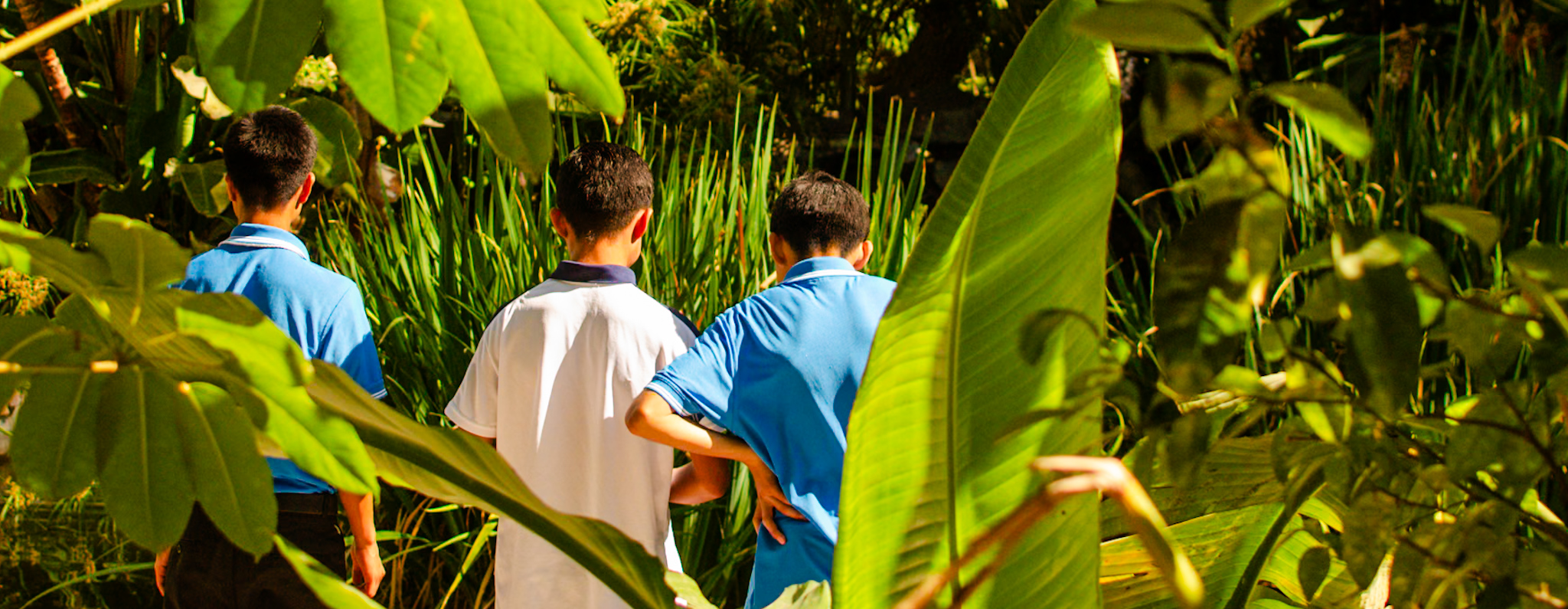
For many young people, the jump from adolescence into adulthood can feel uncertain, especially when questions about identity, purpose, work, school, and the future all arrive at once. Salto Mentoría A.C. was created to meet young people in that in-between space and offer guidance, practical tools, trusted relationships, and a safe place to grow.
 Founded in 2024 by Margrita van der Hoek, Salto Mentoría A.C. provides a free educational and personal development program for adolescents and young adults ages 15 to 20. Serving the Chapala Lakeside area, from San Pedro Itzicán to Acatlán de Juárez, as well as Tapalpa and surrounding communities, Salto helps young people build confidence, direction, and life skills they can carry into every part of their future.
The program is rooted in the World Health Organization’s 10 Life Skills framework and includes life skills workshops, vocational guidance, assessments, coaching sessions, and mentorship with volunteers from the local community. While Salto does not provide counseling or therapy, participants facing serious challenges may be referred to psychologists who support the program.
What makes Salto especially meaningful is its peer learning model. Many of the workshop facilitators are young graduates of previous Salto cohorts, with an average age of 19, who return to help guide new participants, whose average age is 17. This creates a circle of trust. Participants see themselves reflected in the young leaders in front of them, while facilitators develop leadership, communication, organization, and mentoring skills of their own.
Salto is powered almost entirely by volunteers. The current coordination team includes eight volunteers: three adults and five young leaders who graduated from previous program cohorts. Each new cohort is also supported by volunteer mentors from the local community. These mentors often discover that the program changes them, too, as they begin applying the same life skills in their homes, workplaces, and personal relationships.
Since its founding, Salto has completed three consecutive cohorts in Chapala and one in Tapalpa. One of the organization’s proudest recent achievements came in 2026, when the program was successfully replicated in Tapalpa, Jalisco. A local Tapalpa team implemented the full program using the manual developed by Salto’s founders, with support from Chapala. The cohort completed the program and celebrated its graduation, confirming that Salto’s model can be shared with other communities in a practical, sustainable way.
That milestone is especially important because Salto was designed to be low-cost and high-impact. Its strength does not come from large budgets, but from committed people, clear methodology, and the belief that young people flourish when they are seen, supported, and trusted.
Salto also addresses something less visible but equally important: the generational gap many of these young people navigate at home. Many saltarines come from families where parents had little access to formal education or the digital world their children are now growing up in. When a teenager is thinking about career paths, online resources, or life beyond their immediate community, that gap can feel isolating. Salto quietly becomes a bridge. It gives young people a trusted space to explore those questions, while the mentors, vocational guidance, and life skills tools provide the kind of scaffolding that their families — however loving — may not have the tools to offer. Rather than widening the distance between generations, Salto helps young people grow into their futures without leaving their roots behind.
As a young organization, Salto’s biggest challenge is building long-term institutional sustainability. The team is meeting that challenge thoughtfully. Salto recently incorporated as a formal civil association, A.C., and is in the process of obtaining authorized donee status in Mexico, which will allow it to receive tax-deductible donations. Salto was also connected through Lago Alianza to the Charities Aid Foundation institutional strengthening pilot project and was selected as one of the local nonprofits to participate.
The heart of Salto is perhaps best described by the participants themselves, who call it their “safe place.” Salto Mentoría A.C., creates a space where young people can pause, reflect, learn, connect, and take the next leap with more confidence.
To learn more about Salto Mentoría A.C., visit saltomentoria.org, follow them on Facebook at Salto Habilidades de Vida y Mentoría para Jóvenes, or find them on Instagram at @salto_mentoria. The organization can also be reached by email at ramoshoek@gmail.com or by phone at 333-496-8976.