
Para leer en español, seleccione la bandera en la esquina superior de su pantalla.
Stay updated with the Lago Alianza newsletter!
Sign up to receive our newsletter via email.
Lago Alianza Newsletter – September 2026
September Is Will Month in Mexico
If you own a home or other assets in Mexico, September is a particularly good time to take care of something many of us would rather put off: making a Mexican will.
Mexico’s annual “Septiembre, Mes del Testamento” campaign encourages people to put their affairs in order by offering reduced notary fees, expanded hours and access to legal guidance. The national program has been running for more than two decades.
Through October 10, a public open will (testamento público abierto) can be prepared by participating notaries at a substantial reduction from the usual cost. The program also allows up to two specific legacies to be included in the document.
For U.S. and Canadian residents, having a will back home does not necessarily mean your Mexican property is neatly taken care of. A foreign will may be recognized in Mexico, but settling an estate using one can involve additional legal procedures, authentication or apostilles, translations and other complications. A Mexican will covering your assets here can make matters considerably simpler for the people you leave behind.
And while you are deciding where your assets should go, consider including the Lakeside community that became part of your life.
A charitable bequest does not have to be enormous to matter. You might leave a fixed amount, a particular asset or a percentage of your estate to a local nonprofit. Even 5 or 10 percent can become a meaningful legacy for supporting children, families, education, healthcare, animals, the environment or another cause that mattered to you during your years at Lakeside.
Your will is ultimately about making your wishes clear. September simply makes it easier and much less expensive to finally get it done.
Talk with a local notario about your particular circumstances and how best to structure your Mexican will.
Don't Neglect Me
Your Donors Are Not Transactions—They Are Relationships
by a Lakeside donor
Editor's note: The writer asked to remain anonymous, and some details have been adjusted so no single organization is identifiable. The experiences described are representative of feelings we hear from donors across the community, not an account of any one group.
Believe me. I really understand. You work incredible hours. You think about your nonprofit and the people you serve all the time. You put your own money in whenever it is needed. You sacrifice. And you do it gladly—you believe in the cause. And the community is much better because of you. Knowing that what you do is often under-recognized or taken for granted is one reason Lago Alianza exists.
So I get why, at the end of a long day, you say to yourself: my donors are in this like I am. For the cause. For the greater good. You aren't often thanked for all you do, and you think your donors are equally invested. Or they should be. After all, writing a check is easier than organizing spay and neuter clinics, buying and distributing food, sorting glass, providing emergency medical aid and caring for children.
But welcome to the real world.
Here's the truth from one donor to Lakeside nonprofits. I'm not saying this is fair. I'm not saying it is rational. But donors are people, and they have certain emotional needs that are involved in parting with their hard-earned money. Chasing new donors while neglecting your past supporters will eventually probably catch up with you.
I'm a monthly donor to one group and have been for years. About $60 a month. I read their newsletter. Not once has anyone from the organization called to thank me or ask how I feel about how the organization is doing. I believe in them and what they contribute. But if I move from Lakeside, this will probably be a recurring expense I let go.
I've given more than token amounts to two groups. I wrote both with questions about the organization and some concerns. Didn't hear a word back. Guess how I will feel if I get an appeal for more money? Both are doing important work, but that is not enough.
Contrast that with the groups that got it right. I give a small amount regularly to another group. They have told me how much of a difference even that has made to them. Another group has kept me informed about how they used the money I gave them, showing me their careful stewardship of the funds. Another told me about how a donation allowed them to stand back and do some badly needed planning—and where that was leading them, including opening up new sources of support.
And then there's the group that lost me. I supported them for years. They held a special evening for benefactors. We sat at tables talking among ourselves. No one from the organization came by to say hi or thank us for what we'd given. I wasn't a benefactor this year.
I know it is hard work. I know it has to be a priority in an already full schedule. I know you are probably a volunteer yourself. And I know sometimes donors ask for influence or recognition you cannot grant. But here is what I have learned as a donor: people often slip away when they feel uninformed, unappreciated, or disconnected. Many would do more if you made the relationship as important as the transaction.
A donation is more than money. It is an expression of trust. Your donors have chosen to place their resources—and their confidence—in your hands. Nurturing that trust means letting them know they matter, showing them what their support has made possible, and helping them feel connected to the work they are helping you accomplish.
Strong donor relationships do not have to be complicated. A personal thank-you, an occasional phone call, an update about a success, or simply asking for a donor's thoughts can make a tremendous difference. Having informed board members reach out can make a big impact.
So, here's one small place to start: this week, call or write to one donor who has given quietly for a long time without much fanfare—or one who has fallen away—and simply tell them what their support has made possible. Let them know they matter. They might offer ideas and encouragement you never expected.
That's it. Start building the relationship. Because donors don't just give money. They give trust. And trust is the foundation of lasting support.
Nonprofit Spotlight: Wise Girls
Building on a Decade of Impact
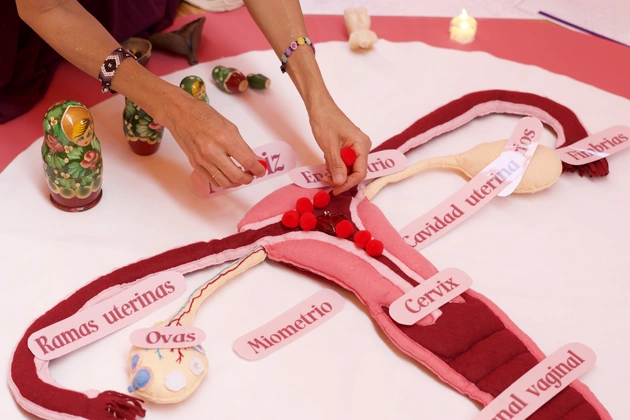 More than 1,000 girls along the Lakeside corridor, from Jocotepec to San Pedro, still need access to accurate, age-appropriate menstrual education.
For many, menstruation remains surrounded by misinformation, embarrassment and cultural taboos. Niñas Sabias/Wise Girls was created to change that by giving girls the knowledge, confidence and practical tools they need to understand and manage menstruation with dignity.
To date, the program has reached more than 10,000 girls through over 500 workshops, while training more than 200 Wise Girls Educators across 13 countries. Its sustainable menstrual kits are produced and assembled locally, and the program has established work in Jalisco, San Miguel de Allende, Chihuahua and Costa Rica, with expansion being developed in Baja California and Colombia.
Now the focus is on strengthening the organization behind that impact.
Wise Girls is seeking support through The Chapala Nonprofits Donor Advised Fund and CAF America for a 12- to 18-month institutional strengthening process that would support the sustainable relaunch of the program throughout the Lakeside area. The goal is not simply to hold more workshops, but to build the infrastructure needed for long-term success, including a strong Board of Directors, committees, volunteers, ambassadors, educators, community partners, donor relationships and systems capable of supporting continued growth.
Community engagement will take place through a new campaign called Full Circle, bringing people together through small gatherings and other outreach activities. These gatherings will introduce people to the need for menstrual education, share the history and impact of Wise Girls, and invite supporters to participate as donors, volunteers, hosts, ambassadors, partners or collaborators.
Wise Girls is also gaining visibility well beyond Lakeside.
Founder Hana has been invited to participate in the inaugural San Miguel Forum, October 7–9, an invitation-only gathering of philanthropic leaders, NGOs, business executives and public-sector decision-makers focused on collaborative solutions. Wise Girls will contribute to the Forum’s work on girls’ empowerment.
The program is also the subject of a short documentary being produced as part of the Chapala Indie Film Festival, with screenings planned at the Lake Chapala Society, Cinematic at Plaza Laguna and LAM House in Chapala.
Internationally, the Wise Girls educational booklet has reached Nepal through researcher Sudha Ghimire, who works in the field of menstrual rights, while Hana will travel to China from October 26 through November 30 to help launch the Wise Girls program there.
Lakeside remains an important part of the next chapter.
The work supported through The Chapala Nonprofits Donor Advised Fund would serve as a local pilot — allowing Wise Girls to implement, evaluate and strengthen its model here, document what works, and create an approach that other communities may eventually be able to adapt.
The vision is ambitious, but grounded in years of experience: to create a strong, sustainable Wise Girls organization capable of continuing to educate girls, support educators, engage communities and expand access to menstrual education for years to come.
Lago Alianza Celebrates First-Ever AI Training Graduates — And the Learning Continues Online
On September 18, Lago Alianza marked a milestone for the Lakeside nonprofit community: the graduation of the first cohort from a twelve-week intensive course on Artificial Intelligence for Nonprofits — the first training program of its kind fully underwritten by Lago Alianza, offered at no cost to any participating organization.
The course was led by Fernanda Ramirez and her team at PILU, with local support from James Turner, and covered a remarkable amount of ground: communications, documents and reports, data and spreadsheets, translation and meeting minutes, and organizing operations and delegating work using tools like Claude, Notion, and Cowork. Participants also worked through essential issues of confidentiality, cybersecurity, and data protection — making sure that as nonprofits move faster, they move safely too.
And it truly was a celebration. Joan Machlis-Crasemann, one of the founders of Lago Alianza, spoke about why AI became a cornerstone of Lago Alianza's training programs. Her remarks are available here. She emphasized that nonprofits are, at their core, in the business of relationships and human, high-touch connection — and that AI's real power is in freeing up time and capacity behind the scenes, so that more energy can go toward the people these organizations serve. Fernanda Ramirez added striking context: no technology in history has ever been adopted this quickly, with 88% of nonprofits worldwide now using at least one AI application. In Latin America, adoption already stands at 55% — and climbing fast.
By the Numbers
The program packed a lot into twelve weeks: live Zoom classes, 11 specialized workshops, and everything offered in both English and Spanish, adding up to more than 50 hours of learning. Participants gave the experience a 4.85 out of 5 rating.
The Pioneers
Twelve Lakeside nonprofits took part in this pilot program, stepping forward as the first to bring AI training into their organizations:
- The Lake Chapala Society
- Tails of Mexico
- Lake Chapala Unitarian Universalist Fund, Inc.
- Poco a Poco San Pedro Tesistán
- FoodBank Lakeside
- Northern Lights Festival
- El Salto Mentoría A.C.
- Healing Young Hearts
- Asociación Pro México
- Programa Pro Niños Incapacitados del Lago
- CreSer
- Abrazo Paz
- Cochera Cultural
At the graduation event, representatives from four of these trailblazing organizations took the stage to share how AI has already reshaped their daily work. At Programa Pro Niños Incapacitados del Lago, Michael Bustos described a strikingly wide range of uses — from having Claude compare and clean up legal documents and research the legal distinctions between religious and civil nonprofit structures in Mexico, to running a full financial risk assessment that flagged fourteen risks (one critical) along with a mitigation plan, to turning recorded board meetings into polished minutes in a fraction of the usual time. At FoodBank Lakeside, incoming operations leads Jeff Hirota and Toni Ryan talked about using what they learned to map their referral process for new families, build a master family list to replace years of fragmented spreadsheets, stand up a new Notion hub for daily operations, and — with Claude's help sorting through eleven hundred pages of old board minutes — finally piece together a complete written policy history for the organization. Vero from CreSer spoke about how the course gave her a genuine first entry point into AI, one she's already using with, in her words, "excellent results," with hopes for more advanced training down the road. And María Blanco of Asociación Pro México shared her own turnaround: she came in knowing AI mainly as the occasional question to ChatGPT, and left understanding it as a whole toolkit — "la IA no es tu suplente, es tu asistente" ("AI isn't your replacement, it's your assistant"), one you train with complete information to get good results. She's since put it to work drafting reports and presentations that used to eat up far more of her time, and said the bigger shift was in how she thinks about AI itself: less something to fear, more something whose reach she controls — a tool that can help her whole team collaborate and stop duplicating each other's efforts. Four different stories, one common thread: less time buried in busywork, more time for the people these organizations exist to serve.
The celebration wrapped up with diplomas for every graduate, followed by a social gathering where most attendees lingered, trading ideas and making new connections.
The Learning Doesn't Stop Here
Here's the best part: this course isn't over — it's now available online, not just to the twelve pilot organizations, but to any nonprofit in the Lakeside area. PILU's e-learning platform gives every learner continuous, self-paced access to the full program: recordings of every live session, presentations, workbooks, and complementary exercises designed to reinforce and deepen the learning experience.
Getting started is simple — just create a free account at with a username and password at one of the links below:
Once registered, you'll have complete access to the learning experience, ready whenever you are. Learn at your own pace, revisit any topic as often as you like, and treat the platform as an ongoing resource throughout your organization's AI journey.
Congratulations to our first graduating class — and welcome to everyone about to begin!
